


Table of Contents
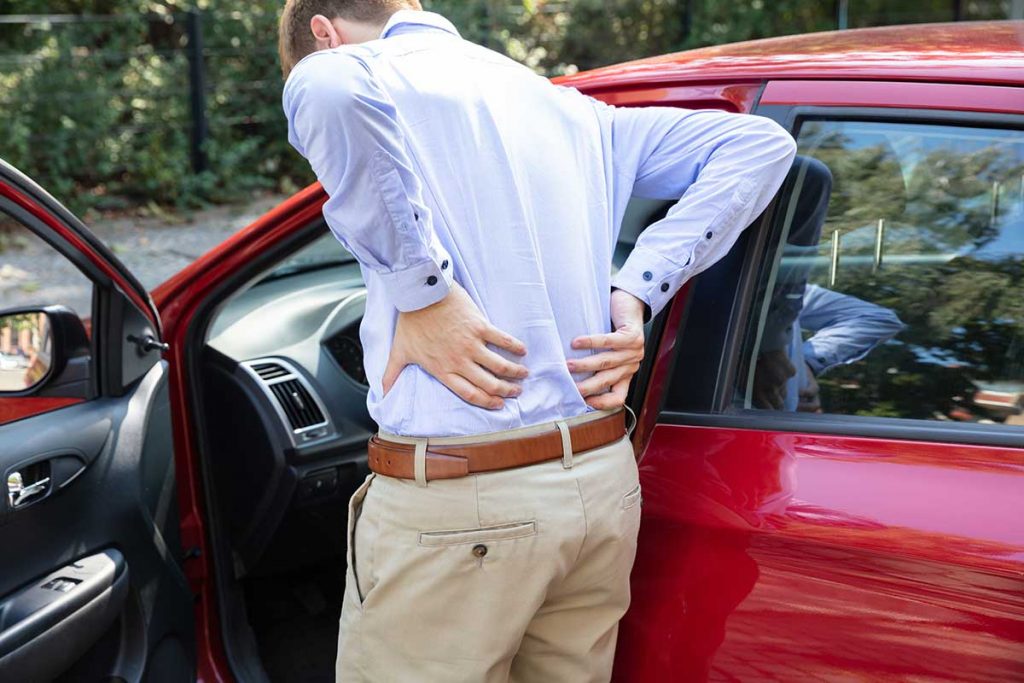
Experiencing lower back pain when driving is uncomfortable and frustrating. People experience back, neck, and shoulder pain when driving, and distance does not always matter. It could be a short commute to work, the grocery store, or a long drive. However, prolonged sitting in a confined space in a moving vehicle that shakes, vibrates, and tosses the body around can wreak havoc on the body.
Causes of Back Pain When Driving
What causes back pain in the car seat? Prolonged sitting places spinal discs, muscles, and other supporting tissues under continuous pressure. The spine, especially the lower back, and the core muscles support most of the body’s weight. Sitting places the back structure under continuous pressure, and when muscles are not moving, they get tired and stiff. Poor posture only increases the likelihood of back pain developing.
Tips to Minimize the Risk of Back Pain
There are some steps every driver can take to reduce the risk of developing common lower back pain after driving, where the pressure on the spine and muscles is highest. The following are a few tips to reduce back pain when driving.
1. Maintain good posture
Posture plays such an important role in back health, whether sitting, standing, bending, etc. In the vehicle, this includes keeping your head in alignment with your shoulders in a neutral position and distributing your body weight evenly on both hips. Avoid twisting, leaning, and awkward stretching to reach items in the back seat or elsewhere in the vehicle. Avoid leaning and neck strain by keeping mirrors positioned to minimize blind spots and keep the vehicle’s sides barely visible.
Also, avoid gripping the steering wheel too tightly, and change hand positions periodically. While holding the steering wheel, the elbows should be slightly bent.
2. Position the seat
The best seat position for lower back pain while driving provides the right support. The knees should be situated so they are slightly lower than the hips, and the knees should be slightly bent when the foot is on a pedal. The hips should be positioned as far back in the seat as possible. The backrest should be positioned at approximately a 100- or 110-degree angle to support the curve of the back.
3. Use lumbar support
Some of the newer vehicles have built-in lumbar support that can be adjusted to fit the driver. However, many cars and trucks do not have this feature. In either case, if the lumbar support is not sufficient, there are options. The driver can use a lumbar pillow that fits the gap between the lower back and the seat. A rolled towel also works well as a lumbar support for driving and lower back pain relief. This relieves back pressure and is a reminder not to slouch.
4. Use the heated seats
Turning on the heated seat at intervals on long drives will help keep muscles relaxed by increasing blood flow. If the vehicle does not have heated seats, disposable heat wraps are available today that can provide relief for stiff back and neck muscles.
5. Take breaks
Ideally, it is important to stop every 60-90 minutes and walk around. Stop every two hours as a minimum. During the break, stretch the back and hips to reduce muscle stiffness and fatigue.
FAQs
What is the best seat position for lower back discomfort?
The best seat position for lower back discomfort maintains the spine in a neutral position. It reduces pressure on the lumbar discs and minimizes muscle fatigue. The seat should be positioned to keep the knees slightly bent while using the pedals and slightly below the hips. The seatback should be slightly reclined at 100 or 110 degrees to reduce pressure on the lower back.
Is a lumbar pillow good or bad?
The lumbar pillow is good when it helps maintain the spine’s natural curve, and it is positioned correctly. The pillow should fill the gap between the seatback and lower back curve without pushing the spine into an arch. A lumbar pillow that is too firm and overstretches the lower back is not helpful.
The lumbar pillow works best when combined with other steps, like ensuring the seat is properly adjusted. Also, some people have lower back conditions, such as a herniated disc or arthritis, that are causing lower back pain. The lumbar support should be designed for the health condition.
How often should I stop on a road trip?
The recommendation is to stop every 60-90 minutes to walk around and stretch. The upper limit for periodic stopping is two hours.
Should knees be higher than hips when driving?
Ideally, the knees should be a bit lower than the hips when driving. Adjust the seat height and tilt to allow for a slight knee bend. This helps maintain the spine’s natural curve and reduces strain on the hips, legs, and buttocks. Also, slouching is minimized.
When to Consult a Physician
Paying attention to posture, using lumbar support, and taking frequent driving breaks are often all it takes to prevent or end back pain on long drives. However, the pain may persist despite taking these steps. If that occurs, it is important to see a spine doctor because there may be another musculoskeletal or spine issue that needs evaluation.