
Table of Contents
- Sitting Too Long
- Symptoms You are Sitting Too Long
- What Causes Pain From Prolonged Sitting?
- Reducing Discomfort and Pain
- Consider Your Lifestyle
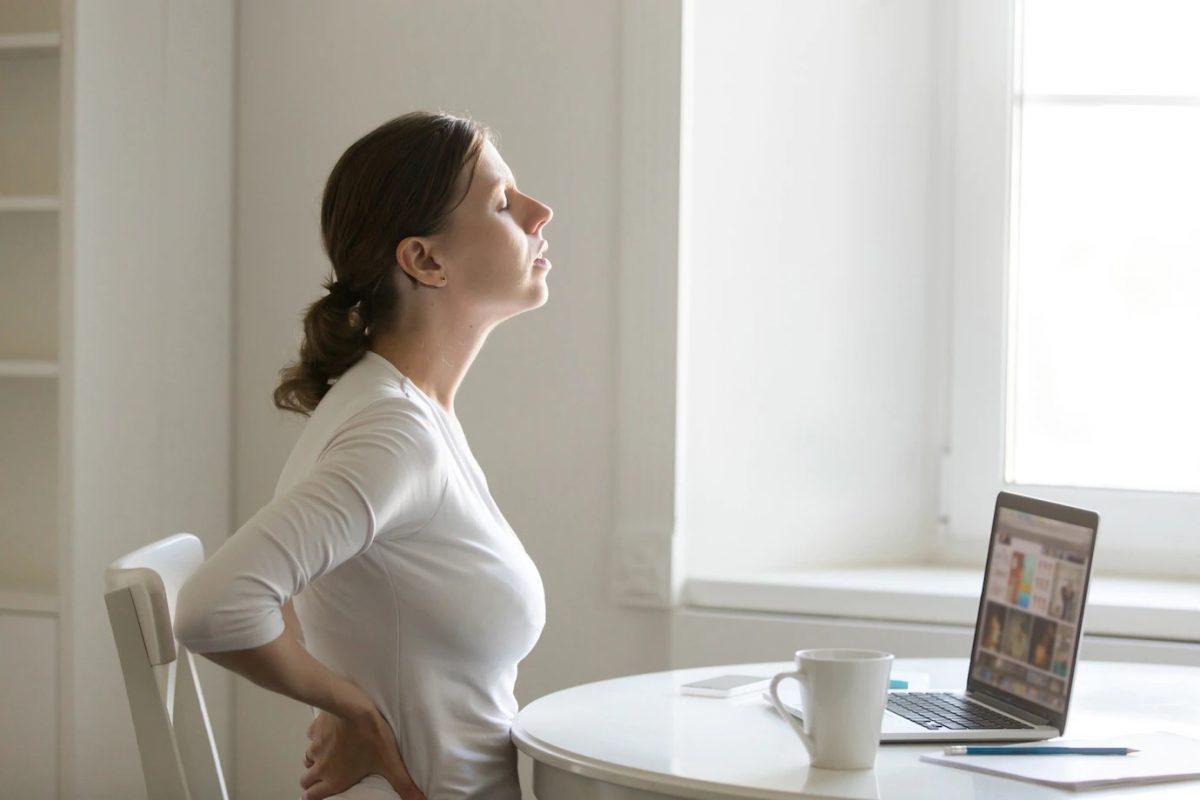
It is not unusual to develop aching lower back, stiff legs and hips, a painful neck, and stiff, painful shoulders after prolonged sitting. Sitting for more than eight hours a day without physical activity can harm the body in many ways, from a compressed spine to tight muscles and reduced circulation. The discomfort from sitting all day can easily turn into pain and long-term health issues.
Sitting Too Long
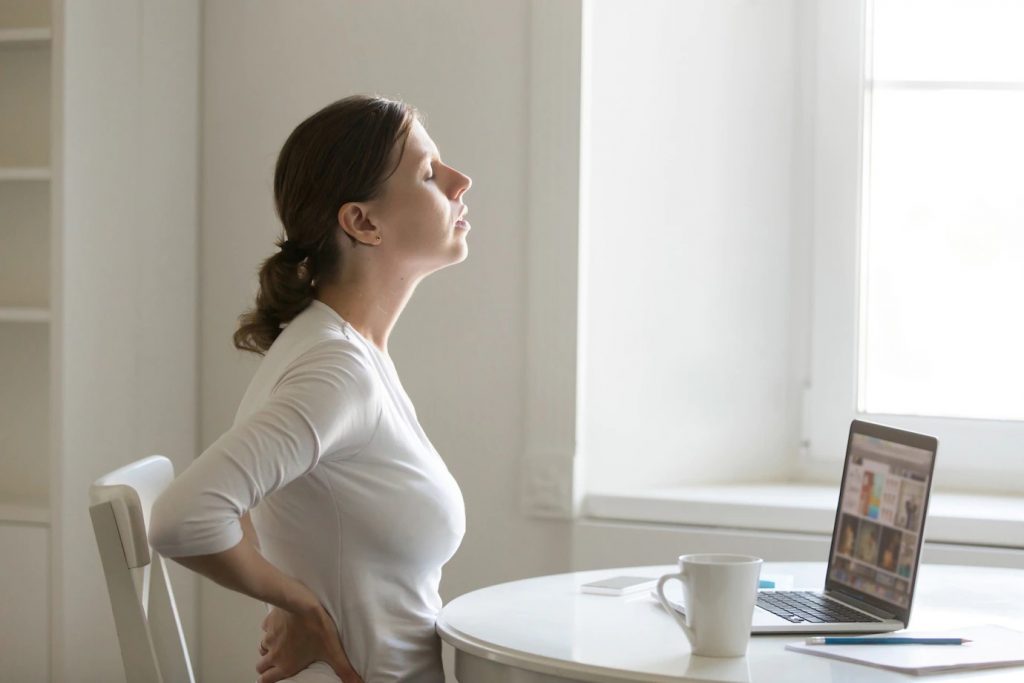
Sitting too long at a desk or in a chair is common in modern society. People sit at work desks for hours, working on their computers, and at home watching TV, playing digital games, and using a mobile phone.
It is estimated that Americans spend 9.5 hours each day sitting, most of it in long stretches of time without taking a break. When sitting all day, discomfort is the first indication that you have sat too long and are causing bodily harm.
If you do not get up and move around, the discomfort will get worse. Discomfort from sitting all day is an unpleasant feeling that you should take notice of, as it is your body telling you to move to reduce it or prevent physical issues.
Symptoms You are Sitting Too Long
Symptoms indicating you are sitting too long include the following:
- Back, neck, shoulder, and lower back discomfort from sitting with poor posture
- Hip tightness
- Taut muscles in the legs
- Leg and ankle swelling
- Difficulty standing up from a sitting position
- Glute discomfort
What Causes Pain From Prolonged Sitting?
Why does my lower back feel tight after sitting? Why do I have trouble standing up after sitting for hours? Why do my hips feel so tight?
Maintaining poor posture while sitting for a long time is the main reason discomfort and pain develop. These two factors lead to physical changes that can become serious health issues if allowed to continue developing.
- An arched neck strains the trapezius muscle, which connects the shoulder and upper back to enable holding the neck up; the muscle becomes tight and painful and develops painful “knots.”
- Discs in the lower back bulge, with surrounding tissues tightening in response to prevent further bulging.
- Spinal nerves are compressed.
- Gluteal (butt) muscles are weakened by a lack of movement and are unable to maintain proper body alignment.
- The side hip muscles are stretched, and the hip flexors in the thighs tighten to accommodate the sitting position.
- Standing up irritates the stretched muscles, and they are unable to hold the hips in the correct position.
- The lumbar spine and muscles assume additional strain from the load placed on the hips and legs.
- Circulation is decreased.
When the muscles in the butt, hips, and thighs are not working in alignment, hip tightness from sitting all day leads to discomfort and pain in the hip, back, knee, and legs. Upper back pain is due to stiffness and muscle imbalances. Over the years, sitting for long periods without taking steps to address the physical effects can lead to health problems they may not suspect.
For example, people who sit a lot and do not take enough breaks have a significant risk of developing metabolic syndrome, which includes cardiovascular issues, fat accumulation leading to weight gain,n and other adverse effects.
Reducing Discomfort and Pain From Sitting Too Long
You can learn how to reduce stiffness from desk work or other activities that involve prolonged sitting. For example, you can do stretching exercises and stand up periodically.
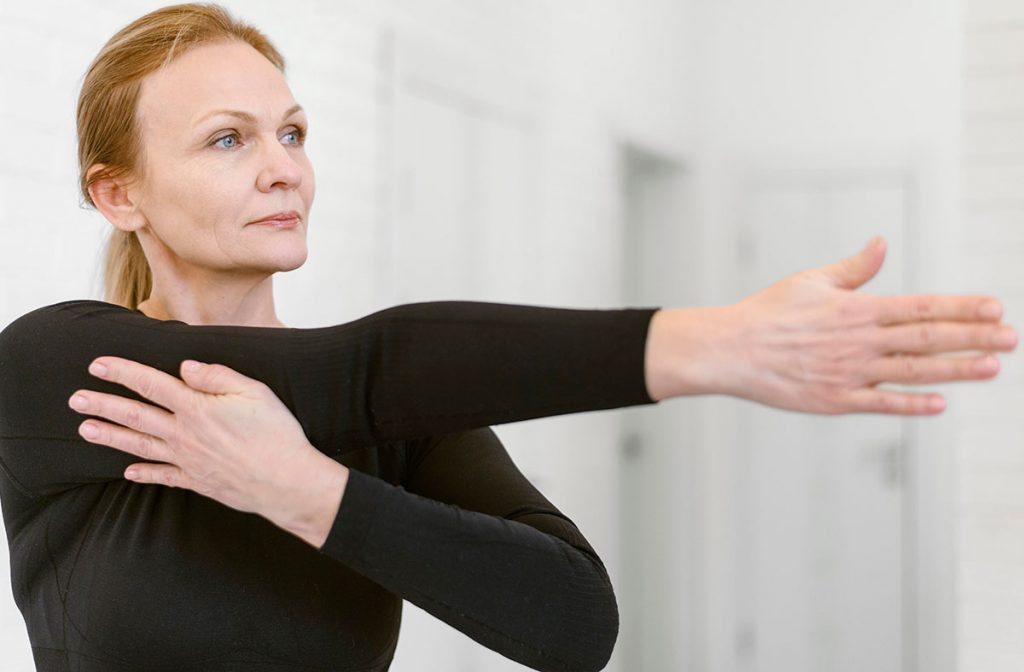
Taking time out to stand is easy. How often should you stand up during work? Standing up for at least 5 minutes every hour of sitting helps muscles move, the spine recover its natural curve, and generally restores the body’s alignment. Walking around will also help your joints and muscles. Some people set an alarm to remind themselves to stand up. You should not sit at home too long either.
Throughout each hour, you can do stretches at your desk. Some of the best desk stretches for tight hips are hip flexor exercises. For example, the yoga exercise called the forward fold hamstring stretch targets the lower back and the back of the legs. While seated, place a heel on a shelf or box, bend forward at the waist, and reach for the toes. Repeat with the other leg. Other exercises include neck rolls, torso twist, seated figure-4 stretch, and the chest and upper back stretch.
The following are some additional ideas to reduce discomfort from sitting all day.
- Walk whenever an opportunity presents itself.
- Stand while talking on the phone.
- Use work breaks to do simple exercises, like lunges in the break room or on an outdoor patio.
- Use a standing work table, but remember to move around.
- Sit in an ergonomic chair.
- Exercise regularly at home.

Consider Your Lifestyle
The modern lifestyle favors sedentary habits, including prolonged computer use. If you sit at work for hours at a time and sit most of the evening at home, you are likely to develop lower back pain, stiff hips, neck, and shoulder pain and discomfort in the posterior muscles. The spine compresses, and muscles weaken, throwing the whole body out of alignment. Eventually, discomfort becomes chronic pain. If you need assistance developing a plan to prevent discomfort from prolonged sitting, do not hesitate to ask your doctor for help.