
Table of Contents
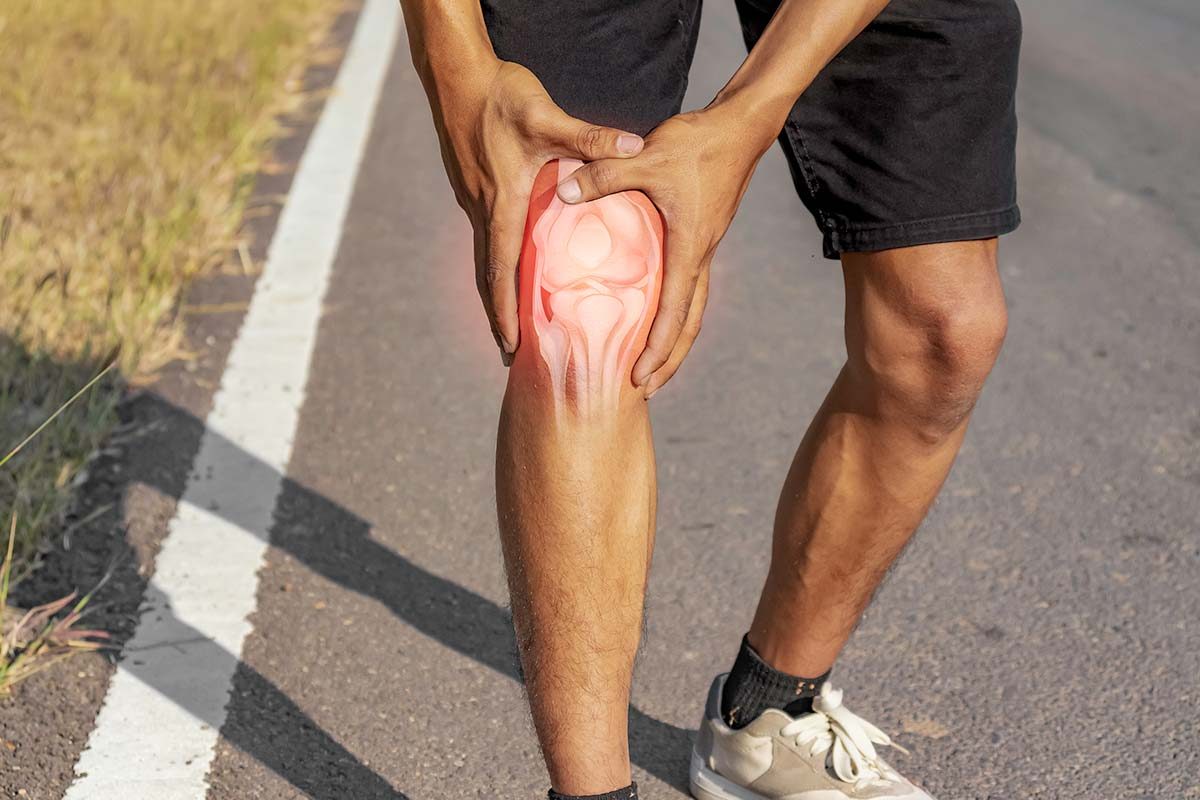
Every year, millions of people of all ages sprain a knee. Even though knee sprains can be painful, most are not serious. Typically, using home remedies for a sprained knee is all that is necessary to heal the sprain. Typical causes of knee sprains include overuse or repetitive motion of the knees and legs, falls, intense exercise routines that place stress on the knees, and injuries. Anyone experiencing knee pain wants to know how to fix a sprained knee fast. The recommended self-treatment is R.I.C.E., an acronym for Rest, Ice, Compression, and Elevation, a highly effective home treatment method.
Ligaments in the Knee
Four major ligaments provide stability in the knee and support movement.
1. ACL – The anterior cruciate ligament connects the femur (thighbone) to the tibia (shinbone).
2. LCL – The lateral collateral ligament is located on the outside of the knee and connects the femur (thighbone) to the fibula (outer lower leg bone).
3. MCL – The medial collateral ligament is a strong cord of tissue on the knee joint’s inner side and connects the femur (thighbone) to the tibia (shinbone).
4. PCL – The posterior cruciate ligament stabilizes the tibia on the femur.
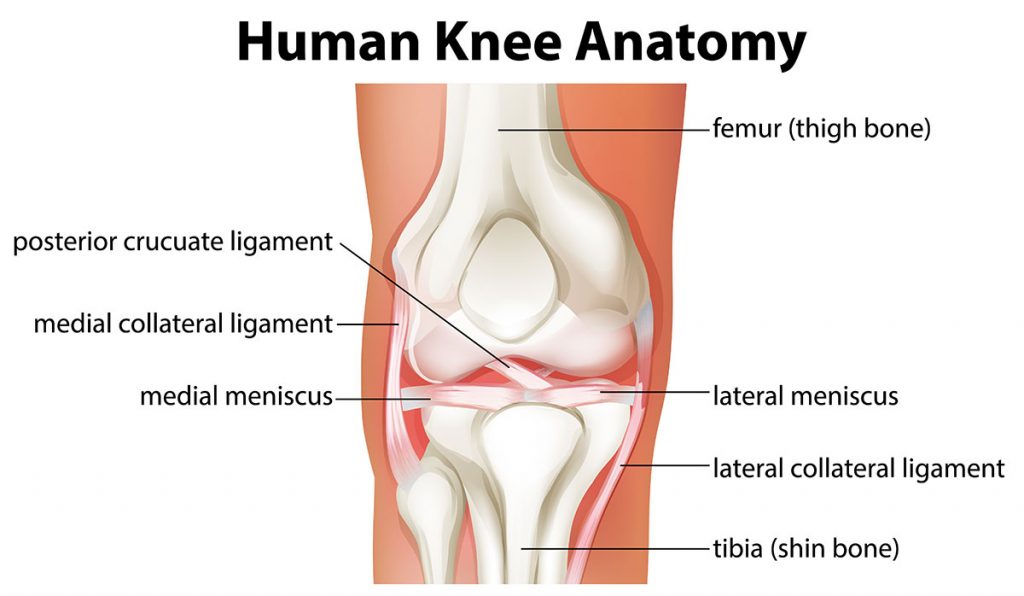
Any of these ligaments can be sprained through overuse or injury. The two ligaments most commonly sprained, though, are the ACL and MCL. The ACL is usually sprained by sudden stopping or twisting motions. The MCL may be sprained when there is a direct blow to the outside of the knee.
Diagnosing the Type of Knee Strain
There are no good statistics on the total number of knee sprains each year because many are not serious and are not reported to doctors. People treat mild knee ligament sprains at home. However, it is important to let a doctor assess any ligament strain to ensure there is no tissue or bone damage that requires more than home remedies for a sprained knee.
The knee is a complex structure. It may seem like a simple ligament sprain, but it may be a broken bone or other severe damage. If it is a ligament sprain, there are three grades of knee sprains.
1. Grade 1 (mild)
The ligament has no or very little tearing.
2. Grade 2 (moderate)
The ligament has a partial tear, but the tear is not completely through the ligament.
3. Grade 3 (severe)
The ligament is torn.
Mild and moderate ligament sprains can often be managed at home with self-care.
Self-Care Steps
The following is how to heal a sprained knee using the R.I.C.E. knee sprain treatment plan and other strategies. These are sprained knee home remedies.
R.I.C.E
The standard advice for knee sprains that can be treated at home begins with R.I.C.E.
R is for Rest – Rest the knee by avoiding the activities or movements that caused the ligament tear. Giving the ligament time to heal will shorten the recovery time from a knee sprain.
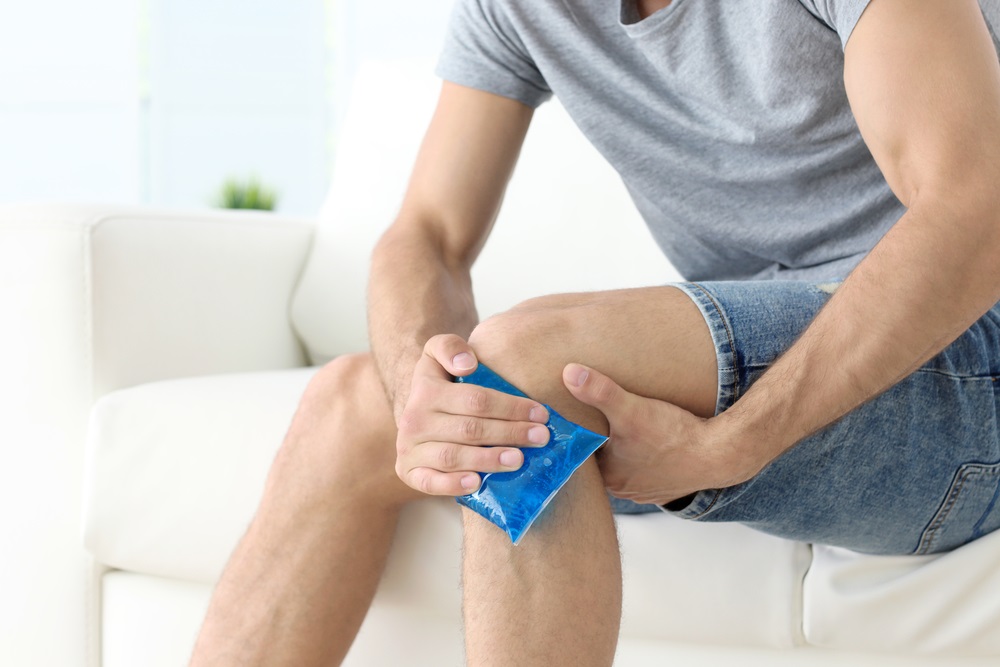
I is for Ice – While allowing the knee to rest, apply a cold compress to the area of the ligament sprain several times a day. Allow 15 minutes each time. To avoid getting the skin too cold, wrap the cold compress in a towel.
C is for Compression – A compression wrap, like an elastic bandage, wrapped around the knee, will help keep swelling down.
E is for Elevation – While resting the knee, keep it above heart level. You can keep the knee elevated while lying down by propping the leg on pillows.
Ice, compression, and elevation for knee pain are home treatment steps that can be used for other soft-tissue injuries that cause swelling and inflammation.
Additional Self-Care Treatments
There are several other potential treatments a doctor may recommend.
- Take over-the-counter medications that may reduce inflammation and pain. They include NSAIDs like ibuprofen (Motril, Advil), aspirin, and naproxen sodium (Aleve).
- Apply an over-the-counter anti-inflammatory topical like diclofenac (Voltaren), also an NSAID. It may help with inflammation, pain, and stiffness caused by the ligament sprain.
- Wearing a knee brace may provide some pain relief and joint stability. Crutches might be helpful for a moderate ligament sprain. A lot depends on the severity and cause of the sprain.
- Joints need to move to prevent the accumulation of fluid and waste material that will cause stiffness. Movement is also important for maintaining muscle strength around the knee. After the first week or two, begin gentle exercises to maintain the knee’s range of motion.
- After two weeks, start doing exercises that strengthen the ligaments and muscles, such as step-ups and calf raises. Also begin doing balance exercises, like standing on one leg.
Always consult a doctor before taking any medication to treat the ligament strain. Many over-the-counter medications can produce unwanted side effects or interact with prescription medications.
Allow Time for Healing
A mild ligament sprain may take up to three weeks to heal. A moderate ligament sprain may require up to six weeks of recovery. Severe ligament sprains can take several months to recover from. Following the recommended home treatments will help the ligaments heal as quickly as possible. However, it is important to allow enough time for the ligament to heal before placing stress on it. Trying to rush a return to the activities that led to the knee sprain will only cause more damage.